
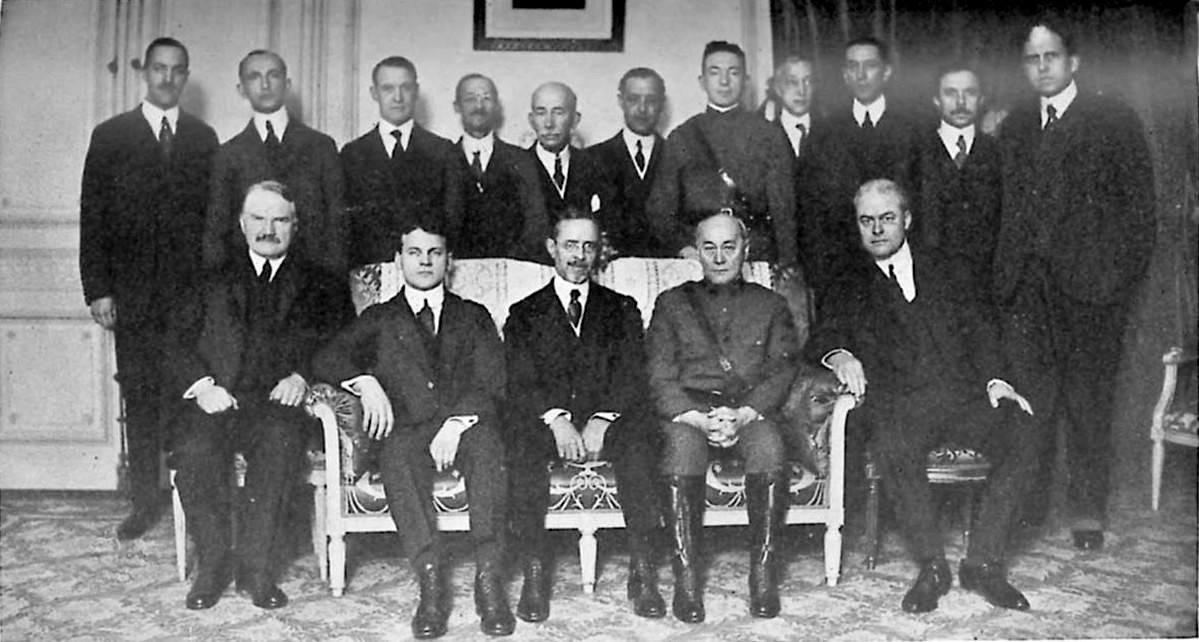
On October 14, 1919, following intense political pressure in India and fiery debates in the British Parliament regarding military violence in Punjab, Edwin Montagu, the Secretary of State for India, officially announced the creation of the Disorders Inquiry Committee. Popularly known as the Hunter Commission, the body was chaired by Lord William Hunter, a former Solicitor-General for Scotland.
The committee was tasked with investigating the disturbances in Delhi, Bombay, and Punjab, assessing their causes, and evaluating the measures taken by military and civil authorities to suppress them. To ensure a degree of apparent credibility, the eight-member panel included three distinguished Indian members: Sir Chimanlal Harilal Setalvad, Pandit Jagat Narayan, and Sardar Sahibzada Sultan Ahmad Khan. The commission conducted public hearings across northern India, taking testimony from key officials and witnesses.
During his testimony in November 1919, Brigadier-General Reginald Dyer unrepentantly admitted that he had opened fire on the unarmed gathering at Jallianwala Bagh without warning, testifying that his intention was to produce a widespread 'moral effect.' The commission eventually split along racial lines in May 1920: the British majority report criticized Dyer for an 'error of judgment,' whereas the Indian minority report issued a scathing condemnation of martial law abuses and Dyer's inhumane conduct.
Why it matters
The Hunter Commission was the principal official inquiry into the Jallianwala Bagh massacre. While General Dyer's callous testimony during the hearings shocked the public and exposed imperial violence, the commission's ultimate divide—between a lenient British majority report and a condemnatory Indian minority report—highlighted deep imperial double standards. This failure to deliver severe punishment to Dyer convinced Indian leaders that British institutions could not provide genuine justice, fueling Mahatma Gandhi's Non-Cooperation Movement.
Interesting fact
During his testimony before the commission, General Dyer admitted that if the narrow entrance to Jallianwala Bagh had permitted armoured vehicles with machine guns to pass through, he would have brought them in and opened fire with them.
People
- Lord William HunterChairman of the Disorders Inquiry Committee
- Edwin MontaguSecretary of State for India
- Sir Chimanlal Harilal SetalvadVice-Chancellor of Bombay University and Indian member of the Commission
- Brigadier-General Reginald DyerBritish Military Commander whose actions were under investigation
- Pandit Jagat NarayanAdvocate and Indian member of the Commission
Quotes
"I think it quite possible that I could have dispersed the crowd without firing, but they would have come back again and laughed, and I would have made what I consider to be a fool of myself."
"They had made up their minds to come there, and a responsibility was resting on me which was very great... I had made up my mind that I would shoot all men down if they were going to continue the meeting."
Gallery
_Calcutta-_Superintendent_Government_Printing,_India_1920_-_ape9901.0001.001.umich.edu_(page_31_crop).jpg)
Location
Council House, New Delhi · New Delhi · India
Open in Google MapsWatch
References
- Wikipedia — British Government establishes Disorders Inquiry Committee (Hunter Commission)
- Report of the Committee Appointed by the Government of India to Investigate the Disturbances in the Punjab · British Library / UK Parliamentary Papers
- Hunter Commission - Encyclopædia Britannica · Encyclopædia Britannica